
Carroll County Genealogy Records
Carroll County genealogy records date back to 1833, the year the county was formed from parts of Columbiana, Stark, Harrison, and Jefferson Counties. The county seat is Carrollton, where most records are kept at the courthouse on South Lisbon Street. You can search for birth, death, marriage, land, and probate records through the Probate Court and Recorder's office. This guide covers the main offices, record types, and research tools for tracing family history in Carroll County, Ohio.
Carroll County Overview
Carroll County Genealogy Record Sources
The Carroll County Courthouse sits at 119 S. Lisbon Street, Carrollton, OH 44615. Call 330-627-2250 for help. Several offices in the building hold different types of records. The FamilySearch Wiki for Carroll County lists all record types and dates for the county. It is a good first stop for anyone starting their research here.
The Carroll County Probate Court keeps birth and death records from 1867 to 1908, marriage records from 1833, and probate records from that same year. You can get certified copies of marriage licenses and probate files at the courthouse. Walk-in visits are the best way to access older records. Staff can help you find what you need if you call ahead with your request details.
The Carroll County Recorder holds land records from 1833. These include deeds, mortgages, and plat maps. Land records are useful for tracking where ancestors lived and how property changed hands over time.
Vital Records in Carroll County
Birth and death records in Ohio follow a split system. County probate courts kept these records from 1867 through 1908. After December 20, 1908, the state took over. The Ohio Department of Health now holds birth records from that date forward. Death records from 1908 to 1953 sit with the Ohio History Connection archives. Deaths after 1953 are with the state health department. Under ORC Chapter 3705, all vital events must be filed with local registrars and follow state rules for registration.
Marriage records at the Carroll County Probate Court go back to 1833. That is the full span of the county's existence. These are some of the most useful records for genealogy work because they often list parents' names, ages, and places of birth. If you need a certified copy, contact the Probate Court directly.
Probate records from 1833 are also at the court. These include wills, estate files, guardianship papers, and adoption records. Adoption files have limited access under ORC Section 3705.126.
Carroll County Research Collections
The Carroll County Historical Society runs the McCook House Museum and keeps research collections in Carrollton. They hold family histories, old photographs, and local documents that can help fill gaps in your Carroll County genealogy research. The society also puts on programs and events focused on county history.
The Ohio History Connection Archives in Columbus is another key resource for Carroll County researchers. They hold death records from 1908 through 1953, plus manuscripts, newspapers, and census records that cover the whole state.
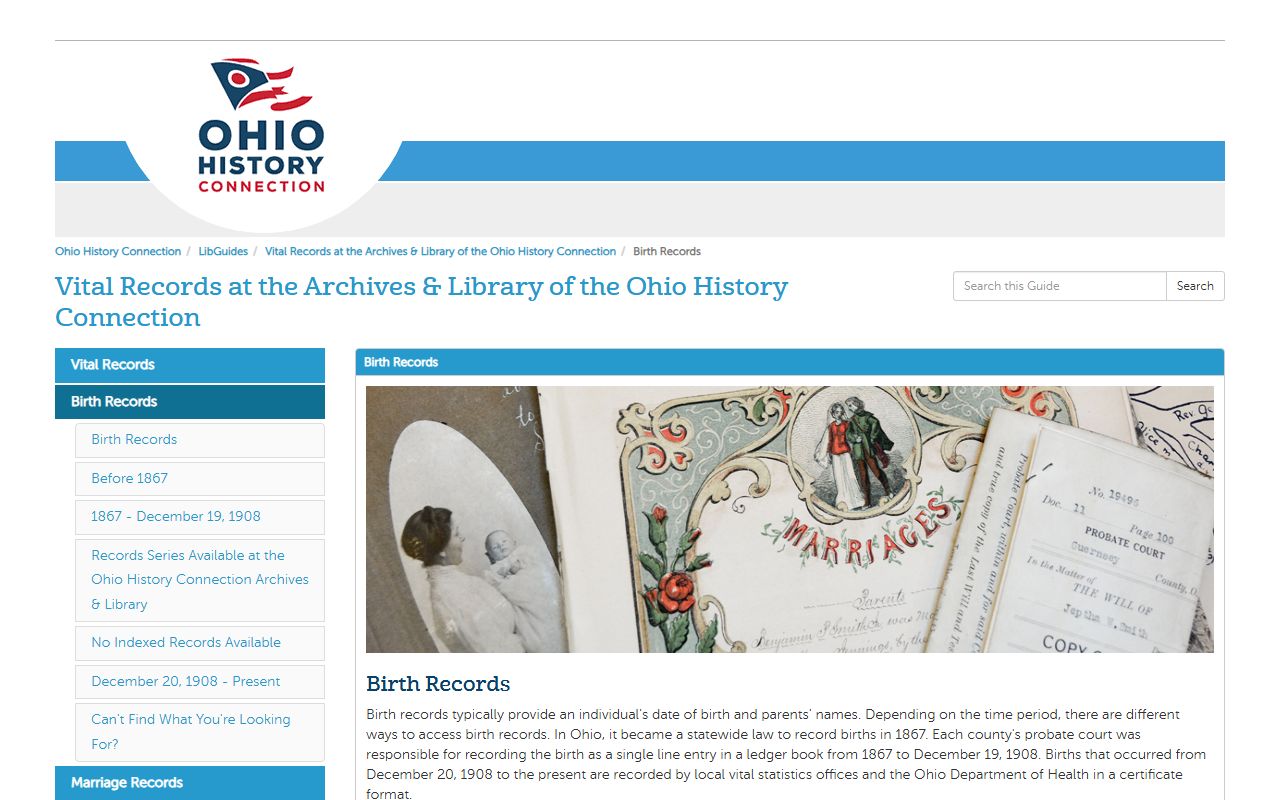
The Ohio History Connection also provides online guides to help you figure out which office holds specific record types by time period.
Carroll County Library Genealogy Resources
The Carroll County District Library in Carrollton keeps a local history collection with materials on Carroll County history and genealogy. The library gives access to genealogy databases for in-library use. Staff can point you to the right resources if you are just getting started with your family history search.
For online research, FamilySearch offers free access to Ohio databases. These include births, deaths, marriages, and county-level records. The OhioGenealogy.org site also compiles county-specific links and finding aids that can save you time. The Ohio Genealogical Society publishes the Ohio Records Index, which covers census, tax, court, and vital records statewide.
Land and Court Records
Land records for Carroll County start in 1833. The Recorder's office holds deeds, mortgages, plats, and surveys. These records show property transfers and can help you trace where your ancestors owned land in the county. Court records also go back to 1834. The Clerk of Courts keeps civil and criminal case files, including divorce records.
Ohio is a public records state. Most court and land documents are open to anyone who asks. Under Title 37 of the Ohio Revised Code, the rules for accessing vital records and related documents are set out clearly. Some items like adoption files and sealed records have restrictions, but the bulk of what you need for genealogy work is available.
Note: For Carroll County birth and death records after 1908, contact the Ohio Department of Health at 614-466-2531.
Getting Copies of Carroll County Records
State birth and death certificates are available through the Ohio Department of Health. The fee is $21.50 per search as of 2025, under ORC 3705.24. Online orders take about three weeks. Mail orders run four to six weeks. You can also visit the state office at 4200 Surface Road in Columbus for in-person pickup.
Local Carroll County records are at the courthouse in Carrollton. The Probate Court issues certified copies of marriage licenses and estate files. The Recorder handles deed and land document requests. Divorce decree copies come from the Clerk of Courts. If you live far from Carrollton, call the office you need to ask about their mail-in process. Most departments can work with written requests if you include the right fee.
Carroll County was formed from four parent counties: Columbiana, Stark, Harrison, and Jefferson. If your ancestor lived in this area before 1833, check the records of those parent counties. The borders shifted quite a bit during Ohio's early years, and a family farm that ended up in Carroll County may have originally been recorded in one of those other counties. The Ohio Memory digital library also has scanned documents and photographs from archives across the state that may include Carroll County materials.
Nearby Counties
These counties border Carroll County. Records for ancestors who lived near the county line may be filed in a neighboring county instead.