
Highland County Genealogy Records
Highland County genealogy records date back to 1805 when the county was carved from Ross and Adams Counties. The county seat is Hillsboro, where the courthouse at 105 S. High Street holds most of the key record collections. Birth and death records, marriage files, probate documents, and land transfers are all kept in Highland County offices. Whether you are just starting your family tree or trying to track down a specific ancestor, this page covers the local offices, record types, and research tools you can use to find what you need in Highland County, Ohio.
Highland County Overview
Highland County Genealogy Sources
The Highland County Courthouse sits at 105 S. High Street in Hillsboro, Ohio 45133. This is the main hub for genealogy work in the county. Several offices share the building, each handling a different set of records. The FamilySearch Wiki for Highland County has a good overview of what is held where and the dates each collection covers. Court records and divorce files go back to 1805 through the Clerk of Courts. Land records start from the same year at the Recorder's office.
The Highland County Probate Court keeps birth and death records from 1867 through 1908. Marriage records go all the way back to 1805. Probate files start from that year too. Wills, estate papers, guardianship documents, and adoption records are all in the Probate Court's care. If you need a certified copy of a marriage license from the 1800s, this is where to ask. Under ORC Chapter 3705, vital records must follow state rules for filing and access. That law shapes how all Ohio counties handle birth, death, and marriage documents.
For records after December 20, 1908, the state took charge. The Ohio Department of Health now holds birth certificates from that date and death records from 1954 onward.
Land and Court Files
The Highland County Recorder keeps land records from 1805. Deeds, mortgages, plats, and military discharge papers are all filed there. If your ancestor owned land in Highland County, the Recorder's office can show you the chain of title. Property transfers tell you a lot about family moves and connections. A deed from the 1830s might list a wife's name that does not appear in any other record. Land records are some of the most useful sources for early Ohio genealogy work, and Highland County has a solid set going back to the county's first year.
Court records at the Clerk of Courts also start in 1805. Civil and criminal case files, including divorce records, are on file there. Ohio is a public records state, so most of these documents are open. Some sealed records like adoptions have restrictions under the Ohio Revised Code. But the bulk of Highland County court files are available if you know the name or case number you need.
Highland County probate records start in 1805 as well. Wills, estate papers, and guardianship files are all at the Probate Court. Early wills from this part of Ohio sometimes name children, in-laws, and even neighbors who served as witnesses. Estate inventories list personal property, farm animals, and tools. These records give a window into daily life that vital records alone cannot provide. If you are trying to sort out which branch of a family lived in Highland County versus a neighboring county, probate records often settle the question.
Highland County Research Tools
The Highland County District Library in Hillsboro holds genealogy and local history collections. They have county histories, cemetery records, and newspaper indexes that fill in the gaps official records leave behind. Staff can point you to the right shelf or microfilm reel if you visit in person. The library is a good first stop if you are not sure which office holds the record you want. They also provide access to databases like Ancestry and HeritageQuest for in-library use, so you can cross-reference Highland County records with federal census data and other national databases.
The Ohio Genealogical Society publishes statewide indexes that cover Highland County records including census, tax lists, and vital records. Their research library in Bellville has materials you will not find online anywhere.
The Ohio Department of Health vital statistics portal lets you check what birth and death records are held at the state level for Highland County residents.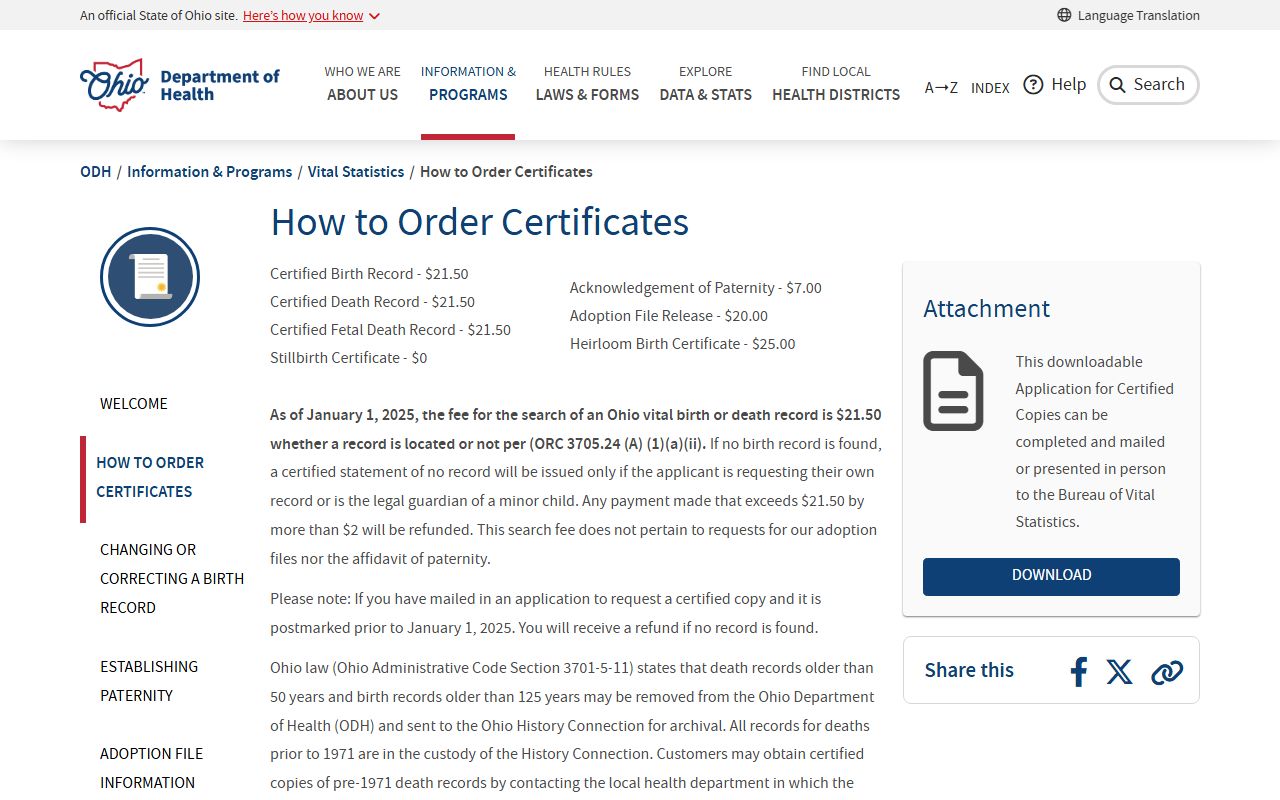
Use this portal to order certified copies of Highland County birth and death certificates filed after 1908.
Genealogy at the Historical Society
The Highland County Historical Society keeps local history collections and research materials. Their holdings include photographs, family files, and published county histories that are hard to find elsewhere. If you hit a dead end with official records, the historical society may have the missing piece. Volunteers there often know the old families and can help connect the dots between records.
For online research, FamilySearch offers free access to Ohio databases including Highland County records. The Ohio History Connection Vital Records Guide explains which office holds specific record types by time period. Death records from 1908 to 1953 are at the Ohio History Connection Archives in Columbus. After 1953, death records shift to the Ohio Department of Health. The OhioGenealogy.org site provides free links to county-level resources. The Ohio Memory digital library is also worth checking for digitized items tied to Highland County and the surrounding area.
Note: Highland County birth records before 1867 may exist in family bibles, church registers, or early census returns rather than official county files.
Nearby Counties
These counties border Highland County. Ancestors who lived near the county line may have records filed in a neighboring county.