
Search Montgomery County Genealogy
Montgomery County genealogy records go back to 1803, the year Ohio became a state and the county was formed from Hamilton and Wayne Counties. The county seat is Dayton, a major city in southwestern Ohio. You can search birth, death, marriage, land, probate, and court records through the Montgomery County Courthouse at 41 N. Perry Street. The Probate Court handles vital records and estate filings while the Clerk of Courts keeps divorce and civil case files. This guide covers the main offices, record collections, and research tools for Montgomery County genealogy.
Montgomery County Overview
Montgomery County Genealogy Sources
The Montgomery County Courthouse at 41 N. Perry Street in Dayton is the primary location for genealogy records. The Montgomery County Probate Court holds birth and death records from 1867 through 1908, marriage records from 1803, and probate files from 1803. This gives Montgomery County one of the oldest record collections in Ohio. The court also maintains wills, estate inventories, guardianship papers, and adoption records. Probate files are especially rich for genealogy work because they name heirs and describe family relationships that vital records rarely capture.
The Clerk of Courts keeps divorce records and civil court files from 1803. Criminal case files are available too. Court records in Ohio are public, so most documents can be reviewed by anyone. Some restricted items like sealed adoption files and juvenile records have limited access.
The Montgomery County Recorder maintains land records from 1805. Deeds, mortgages, plats, military discharge papers, and other property documents are filed with this office. Land records help track when families arrived and who they bought property from.
The Montgomery County Recorder's website provides access to land and property records.
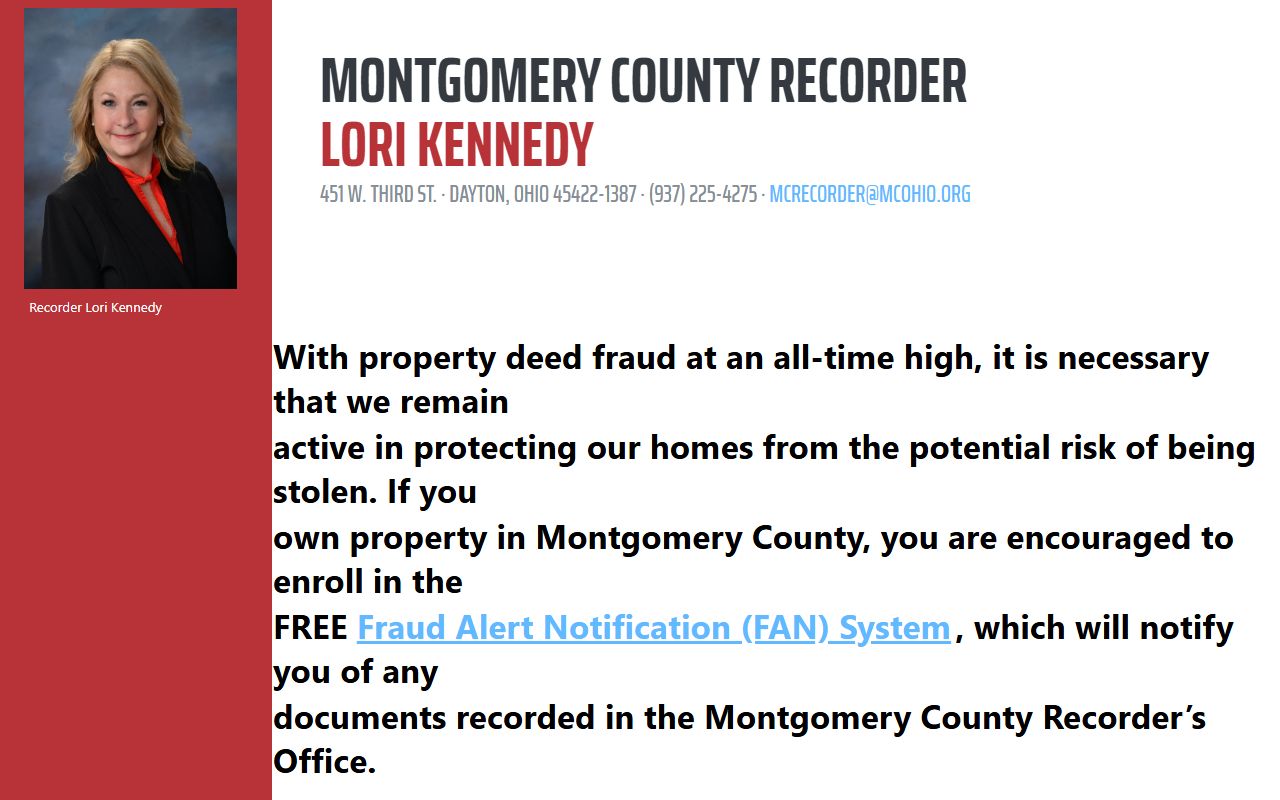
You can visit the Recorder's office in Dayton or check their online tools to search deed and mortgage records for Montgomery County.
Vital Records for Montgomery County
Birth and death records at the Montgomery County Probate Court span 1867 to 1908. These are ledger entries with names, dates, and sometimes parents or cause of death. For records after December 20, 1908, the Ohio Department of Health took over registration. You can order certified copies of birth and death certificates through their office.
Marriage records in Montgomery County start in 1803. That is the same year the county was organized. The licenses and returns list both parties, ages, and often their residences. These records connect families and can point you to earlier generations. The Probate Court handles all marriage filings. Under Ohio Revised Code Chapter 3705, vital events must be registered with local registrars and then filed with the state.
Death records from 1908 through 1953 are at the Ohio History Connection in Columbus. After 1953, contact the Ohio Department of Health.
Montgomery County Libraries and Archives
The Dayton Metro Library runs the Dayton Room with extensive local history and genealogy collections. The library provides access to Ancestry Library Edition, HeritageQuest, and other genealogy databases on site. Their collection includes local newspapers, city directories, cemetery records, and compiled family histories for Montgomery County. This is one of the strongest genealogy collections in southwestern Ohio.
The Dayton Metro Library's genealogy resources are among the best in the region.
Visit the Dayton Room at the main branch to access genealogy databases, microfilm, and local history materials for Montgomery County.
The Montgomery County Records Center and Archives holds historical government records including older probate, court, and land files that have been transferred from active offices. Researchers can access these archived materials by appointment. The center is a valuable resource for records that are too old or too fragile to stay in the regular courthouse offices.
Note: Montgomery County was formed from Hamilton and Wayne Counties in 1803, so earlier records for the Dayton area may be filed in those parent counties.
Ohio Genealogy Tools for Montgomery County
FamilySearch has a detailed wiki page for Montgomery County with links to digitized records and research guides. The site is free and includes access to many Ohio databases. The Ohio Genealogical Society provides indexes covering Montgomery County census, tax, court, and vital records. Their research library has materials from all 88 Ohio counties.
The Ohio Memory digital library includes newspapers, photographs, and maps from across the state. The OhioGenealogy.org website offers county-specific guides and links to available records. The Ohio History Connection Vital Records Guide helps you figure out which office holds specific records by date range, which is useful when planning a research trip to Dayton or Columbus.
Montgomery County has no official vital records before 1867. For births, deaths, and marriages before that date, you must use church registers, cemetery transcriptions, and family Bibles. Census records from 1810 onward cover Montgomery County, and the 1850 census is the first to list every person by name. Tax lists from the early 1800s name property owners and track land holdings over time. Dayton grew quickly in the mid-1800s, and city directories from that era can help you find where a family lived and what they did for work. For newspaper research, Chronicling America has digitized Ohio papers including some Dayton publications. Naturalization records at the county level can also help trace immigrant families who settled in Montgomery County during the 1800s and early 1900s.
Cities in Montgomery County
Montgomery County includes Dayton, Kettering, and Huber Heights. Residents of these cities use the Montgomery County offices listed above for vital records, court files, and property searches.
Nearby Counties
These counties border Montgomery County. Records for ancestors who lived near the county line may be filed in a neighboring county instead.